YouTube Trending Searches: How Creators Can Use Them
Learn how to discover, evaluate, and use rising YouTube search topics for relevant video planning

Introduction – Why YouTube trending searches Matter
YouTube trending searches are rising topics and search phrases that receive increased interest during a particular period. For creators, they can reveal what viewers may be looking for and provide ideas for timely, relevant videos.
However, a rising topic is not automatically suitable for every channel. Before creating a video, creators should check its relevance to their audience, the search intent behind it, the available competition, and whether the interest appears temporary or long-lasting.
This guide explains practical ways to find YouTube search trends, evaluate them, and use the findings alongside evergreen content. It focuses on research and content planning without promising guaranteed views or channel growth.
What Are YouTube trending searches?
YouTube trending searches are search topics or phrases that show increasing viewer interest during a particular time. They can be connected to news, events, product launches, entertainment, seasonal topics, tutorials, or questions people currently want answered.
Trending searches and trending videos are related, but they are not identical. A trending video is a specific video receiving attention, while a trending search reflects what viewers are actively trying to find.
Creators can use this information to discover timely content ideas, but a rising search does not guarantee views. The topic should still match the channel’s niche, audience, and the purpose behind the search.
How YouTube trending searches Are Created
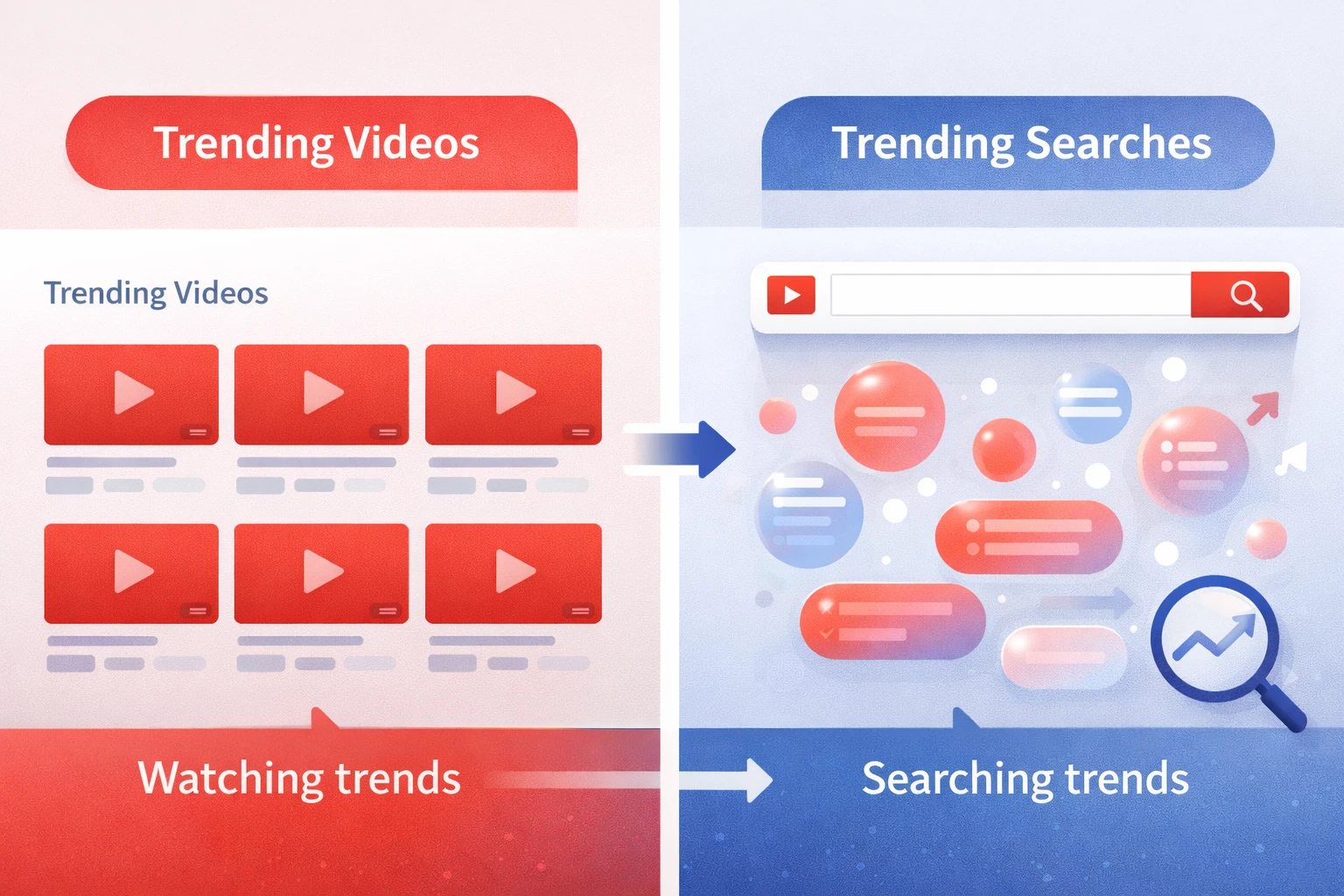
YouTube search interest can rise for many reasons, including breaking news, seasonal events, product launches, entertainment releases, viral discussions, tutorials, and frequently asked questions.
A topic may begin attracting more searches when people want recent information, explanations, reviews, reactions, or solutions related to it. Some trends last only a short time, while seasonal or recurring topics may return regularly.
YouTube does not publicly provide exact search-volume numbers for every query. Therefore, creators should compare multiple signals—such as autocomplete suggestions, recently published videos, audience relevance, and broader interest patterns—instead of treating one signal as proof of a trend.
How to Find YouTube trending searches (Free Methods)
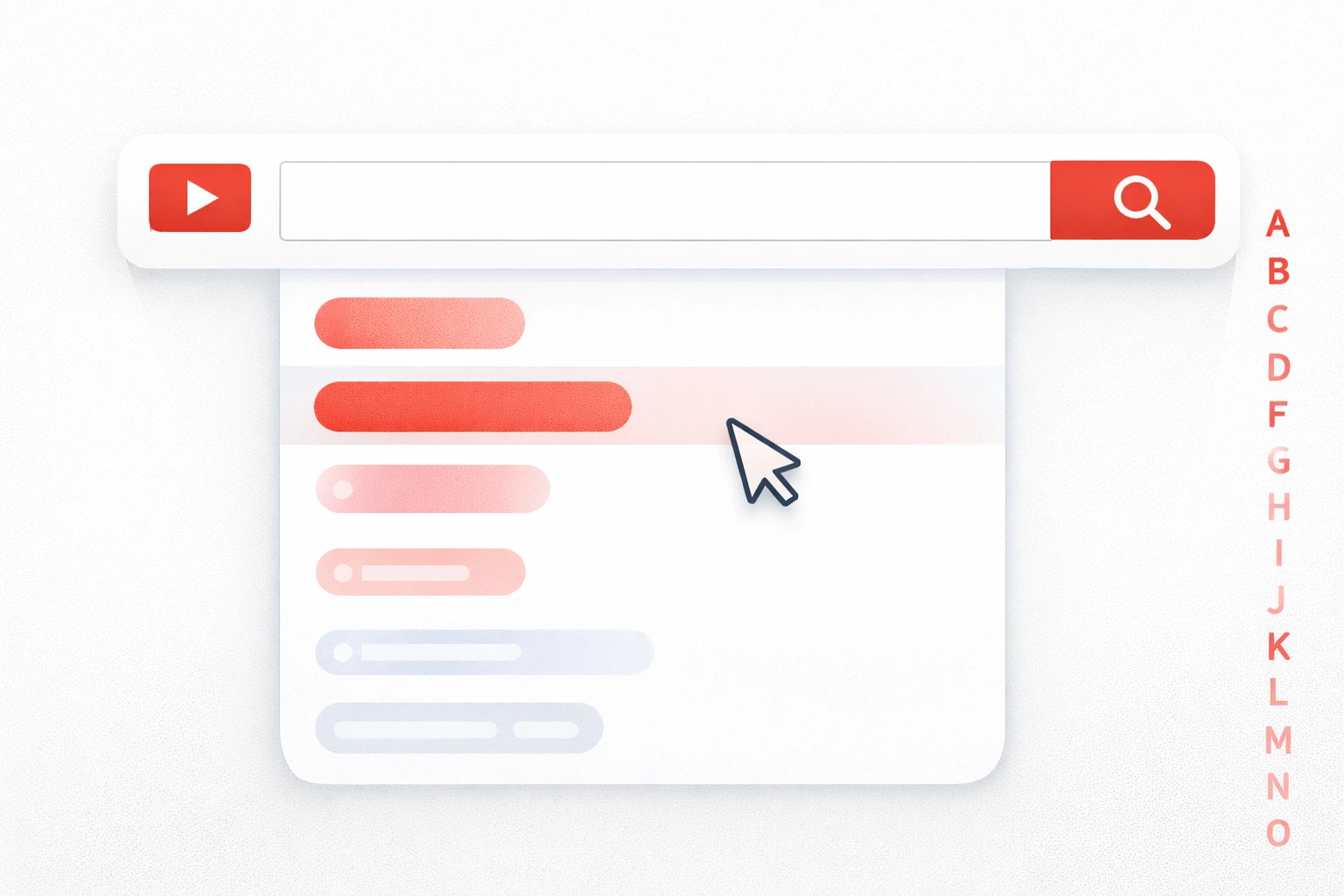
You can research rising YouTube topics using several free methods. No single method confirms demand on its own, so compare multiple signals and focus on topics that match your channel, audience, and content goals.
Using YouTube Search Autocomplete
YouTube autocomplete can help you discover related phrases that viewers may search for. Start by typing a broad keyword from your niche and review the suggestions shown below the search bar.
You can then add a word or letter to explore more specific phrases. For example, after entering a topic, try adding terms such as “how,” “best,” “review,” or “for beginners” to find different search angles.
Autocomplete suggestions are useful for generating ideas, but they do not provide exact search-volume numbers and may vary by location, language, device, and search history. Treat them as one research signal and compare them with other evidence before choosing a topic.
Analyzing Recent Videos by Upload Date
Search for a topic in your niche and review videos published recently. Compare their titles, publishing dates, formats, and visible engagement to understand which angles are receiving attention.
Pay attention to repeated questions, similar phrases, and topics covered by several creators within a short period. These patterns may indicate growing interest, but visible views alone do not confirm that traffic came from YouTube Search.
Use recent-video research as a supporting signal. Before choosing a topic, also check audience relevance, search intent, autocomplete suggestions, and whether you can add useful or original information.
Using a YouTube Trends Search Tool
A trend research tool can organize multiple signals in one place and make it easier to compare current video topics. ChanduSEOTool’s YouTube Trend Tool lets users select a country and language, then review trending videos, top niches, commonly used keywords, suggested hashtags, trend scores, and creator ideas.
These details can support topic research, but they should not be treated as exact YouTube search-volume data or a guarantee that a video will perform well. Compare the results with your audience interests, search intent, recent videos, and your ability to add useful information.
Use our YouTube Trend Tool to explore current trend signals by country and language.
How Creators Can Use Trending Searches Effectively
Check Audience Relevance
Choose trends that naturally match your channel’s niche and the interests of your regular viewers. A popular topic may attract attention, but it may not help your channel if it is unrelated to the content your audience expects.
Understand the Search Intent
Identify what viewers want when they search for the topic. They may be looking for a tutorial, explanation, review, comparison, update, or reaction. Your video should clearly address that purpose instead of using the trending phrase without answering the viewer’s need.
Compare Interest and Competition
Review autocomplete suggestions, recently published videos, repeated topic angles, and broader interest patterns. These signals can help you judge whether interest may be rising, but none of them guarantees views or confirms exact search volume.
Choose the Right Format and Timing
Select a video format that suits the topic and the amount of information viewers need. A short update may suit a simple question, while a detailed tutorial or explanation may need a longer video. Publish while the information is still relevant, without relying on a fixed time window.
Common Mistakes When Using Trending Searches
Choosing an Irrelevant Trend
Avoid selecting a topic only because it is popular. The trend should match your channel’s niche, audience interests, and usual content style.
Treating Views as Proof of Search Demand
A recently published video with many views does not prove that those views came from YouTube Search. Traffic may also come from recommendations, subscribers, external websites, or social media.
Copying Existing Videos
Use competing videos to understand viewer questions and content gaps, not to copy titles, thumbnails, scripts, or ideas without adding original value.
Using Keywords Unnaturally
Include relevant search phrases naturally in the title, description, and spoken content. Repeating the same phrase excessively can make the content difficult to read and less useful to viewers.
Relying on One Research Signal
Do not select a topic based only on autocomplete, one popular video, or a trend score. Compare several signals and consider whether you can create accurate, useful, and timely content.
Trending Searches vs Evergreen Topics
Trending searches focus on topics receiving increased attention during a particular period. They can help creators publish timely videos related to recent events, releases, seasonal interest, or changing viewer questions.
Evergreen topics continue answering useful questions over a longer period. Tutorials, explanations, comparisons, and basic guides may remain relevant after a temporary trend has ended.
Creators do not need to follow a fixed ratio between trending and evergreen videos. The right balance depends on the channel’s niche, audience, publishing capacity, and content goals. Use trends when they are relevant, while maintaining useful evergreen content that can continue serving viewers over time.
Frequently Asked Questions
What is the difference between YouTube trending searches and trending videos?
Trending searches are topics or phrases viewers are looking for, while trending videos are individual videos receiving increased attention. A popular video does not always mean its topic has high search demand.
How can I find YouTube trending searches for free?
You can review YouTube autocomplete suggestions, recently published videos, recurring viewer questions, seasonal topics, and broader interest patterns. Comparing several signals is more useful than relying on one source.
Does YouTube provide exact search-volume data for every keyword?
YouTube does not publicly show exact search-volume numbers for every query. Creators should treat autocomplete, trend tools, and visible video performance as research signals rather than exact demand figures.
Can small channels use trending searches?
Yes, small channels can use relevant trends to find timely video ideas. However, topic relevance, content quality, competition, and search intent still matter, and no trend guarantees views.
How often should creators check for new trends?
The right frequency depends on the channel’s niche and publishing schedule. News-focused channels may research more often, while evergreen channels may only need occasional checks for relevant seasonal or rising topics.
Final Thoughts
YouTube trending searches can help creators discover timely video ideas, but every rising topic should be evaluated for audience relevance, search intent, competition, and accuracy.
Use autocomplete suggestions, recently published videos, seasonal patterns, and trend research tools as supporting signals rather than exact search-volume data. Combining relevant trends with useful evergreen content can create a more balanced publishing plan.
The goal is not to chase every popular topic. Focus on trends where you can answer a real viewer question, add useful information, and publish while the topic is still relevant.

Popular Tools
Recent Posts


